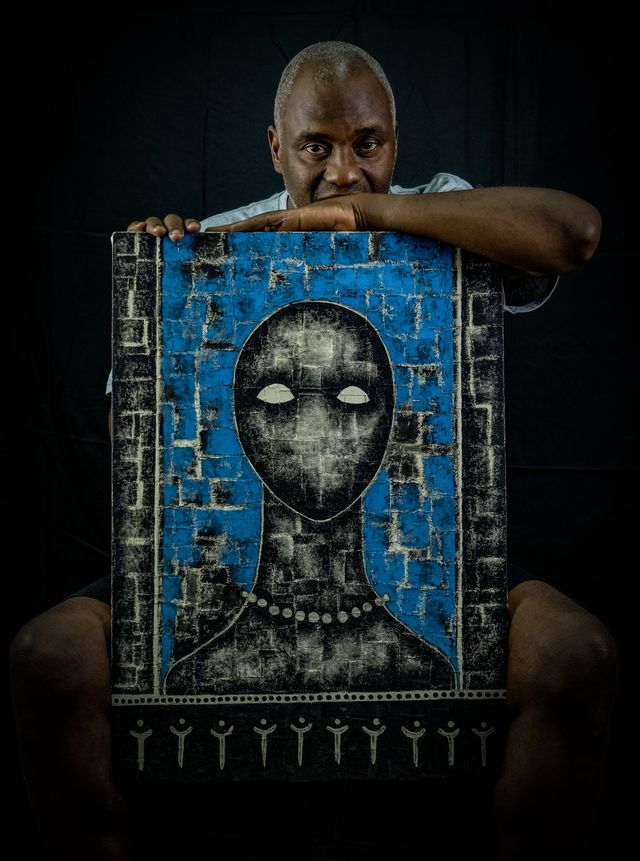
Roberto Diago to Represent Cuba at the 2026 Venice Biennale With “Hombres Libres / Free Men”
Roberto Diago will represent Cuba at the 61st International Art Exhibition of La Biennale di Venezia with Hombres Libres / Free Men, a new installation curated by Nelson Ramírez de Arellano Conde for the Pavilion of the Republic of Cuba. The exhibition will be on view from May 9 to November 22, 2026 at Il Giardino Bianco – Art Space on Via Garibaldi in Venice. Diago is one of the best-known Afro-Cuban artists working today, which gives Cuba’s presentation at the Biennale particular relevance beyond national participation alone.
A Pavilion That Meets You Head-On
The project centers on a group of sculptural heads of varying sizes that advance toward the viewer and meet them head-on. Built from oxidized metal, wood, plastic, and salvaged materials, the works carry visible scars across their surfaces, turning bodily marking into a language of memory, endurance, and presence.
Roberto Diago, “Hombres Libres / Free men”, 2025. Installation, mixed materials, variable dimensions ©Estudio Diago. Courtesy of: Estudio Diago.
Freedom runs through the installation as something earned, defended, and carried forward. The scarred surfaces read as a tactile record of trauma and resistance, with Black skin treated as a site of history, memory, and survival.
Diago’s Long Inquiry Into Afterlives of Slavery
Diago has worked through that line of inquiry for years. The Havana-born artist, born in 1971, has long used found and salvaged materials to examine the afterlives of slavery and the condition of the contemporary Black subject. His work returns repeatedly to the historical conflict of the African diaspora, linking that inheritance to ongoing struggles around survival, identity, and self-definition.
Diago’s pavilion places Afro-diasporic history squarely within one of the art world’s most visible international stages, using sculpture and installation to keep Black memory and Black survival at the center of the conversation. The title Free Men points to a harder idea of freedom, one marked by injury, endurance, and the ongoing work of claiming personhood in the wake of dehumanization. The figures emerge as a genealogy of survivors who have crowned themselves.
International Track Record, Global Stage
Diago arrives at this Biennale with a substantial international track record. His career spans more than three decades, with prior participation in the 47th and 57th Venice Biennales, as well as the Havana Biennial and the Dakar Bienniale. His work has been shown at institutions including the Ethelbert Cooper Gallery at Harvard University, the National Museum of Fine Arts in Havana, and Casa América in Madrid, and is held in collections such as the Museum of Fine Arts, Boston, the Museum of Black Civilizations in Senegal, the National Museum of Fine Arts in Cuba, and the Reina Sofía Museum in Spain.
The Resonance of Hombres Libres / Free Men
The pavilion opens during a Biennale cycle in which questions of history, state representation, and cultural identity are likely to carry particular weight. Within that context, Diago’s contribution stands out for its direct engagement with the material and psychological residue of the African diaspora. Hombres Libres / Free Men presents freedom as marked, embodied, and inseparable from the histories that made it necessary in the first place.
Source: blackartmagazine.com